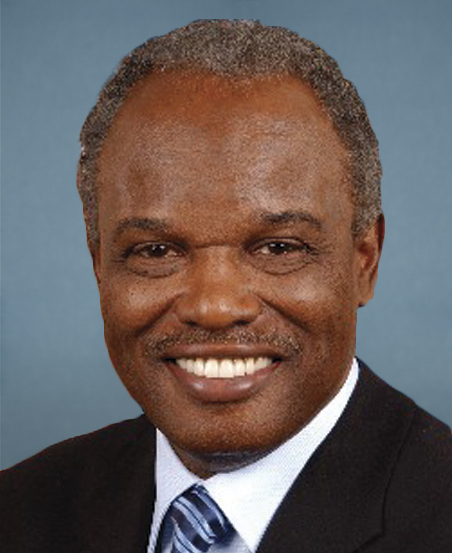
David Scott
Former member · Democrat · House · GA-13 · served until 4/21/26
Voting record
Recorded 1686 of 1734 roll calls while in office · missed 48
| Date | Measure and question | Vote | Chamber |
|---|---|---|---|
| 4/22/26House | On Agreeing to the ResolutionA “rule” for debateA vote to adopt a special rule — a resolution from the Rules Committee setting how a bill will be debated and which amendments are allowed. Adopting it is not a vote on the bill itself, which comes later.House Rules Committee: Special Rule Process ↗ Passage | Not Voting | Passed |
| 4/22/26House | On Ordering the Previous QuestionOrdering the previous questionA vote to end debate and bring the House to a direct vote on the pending question — most often a “rule” setting how a bill will be debated. If it fails, debate continues and the rule can be amended.Rules of the House, Rule XIX, clause 1 ↗ Procedural | Not Voting | Passed |
| 4/21/26House | On Motion to Suspend the Rules and PassSuspension of the rulesA fast-track House procedure, usually for measures expected to have broad support. Debate is limited to 40 minutes, no amendments can be offered, and it needs a two-thirds vote of members voting — not a simple majority. A yes vote passes the bill.Rules of the House, Rule XV, clause 1 ↗ Passage | Yea | Passed |
| 4/21/26House | On Motion to Suspend the Rules and PassSuspension of the rulesA fast-track House procedure, usually for measures expected to have broad support. Debate is limited to 40 minutes, no amendments can be offered, and it needs a two-thirds vote of members voting — not a simple majority. A yes vote passes the bill.Rules of the House, Rule XV, clause 1 ↗ Passage | Yea | Passed |
| 4/21/26House | On Motion to Suspend the Rules and PassSuspension of the rulesA fast-track House procedure, usually for measures expected to have broad support. Debate is limited to 40 minutes, no amendments can be offered, and it needs a two-thirds vote of members voting — not a simple majority. A yes vote passes the bill.Rules of the House, Rule XV, clause 1 ↗ Passage | Yea | Passed |
| 4/20/26House | On Motion to Suspend the Rules and PassSuspension of the rulesA fast-track House procedure, usually for measures expected to have broad support. Debate is limited to 40 minutes, no amendments can be offered, and it needs a two-thirds vote of members voting — not a simple majority. A yes vote passes the bill.Rules of the House, Rule XV, clause 1 ↗ Passage | Yea | Passed |
| 4/20/26House | On Motion to Suspend the Rules and PassSuspension of the rulesA fast-track House procedure, usually for measures expected to have broad support. Debate is limited to 40 minutes, no amendments can be offered, and it needs a two-thirds vote of members voting — not a simple majority. A yes vote passes the bill.Rules of the House, Rule XV, clause 1 ↗ Passage | Yea | Passed |
| 4/17/26House | On Agreeing to the ResolutionA “rule” for debateA vote to adopt a special rule — a resolution from the Rules Committee setting how a bill will be debated and which amendments are allowed. Adopting it is not a vote on the bill itself, which comes later.House Rules Committee: Special Rule Process ↗ Passage | No | Failed |
| 4/17/26House | On Agreeing to the AmendmentAmendmentA vote on a proposed change to the text of the measure being debated — striking language, inserting new language, or both. A yes vote adds the change; the measure itself still needs its own vote to pass.Senate glossary: amendment ↗ Procedural | Nay | Failed |
| 4/17/26House | On Ordering the Previous QuestionOrdering the previous questionA vote to end debate and bring the House to a direct vote on the pending question — most often a “rule” setting how a bill will be debated. If it fails, debate continues and the rule can be amended.Rules of the House, Rule XIX, clause 1 ↗ Procedural | Nay | Passed |
| 4/16/26House | On Agreeing to the ResolutionResolutionA vote to adopt a resolution. A simple resolution (H.Res. or S.Res.) deals only with the chamber voting — its internal business, or a stated position such as a censure. A concurrent resolution (H.Con.Res. or S.Con.Res.) needs both chambers. Neither goes to the president or has the force of law.Senate glossary: simple resolution ↗Senate glossary: concurrent resolution ↗ Passage | Nay | Passed |
| 4/16/26House | On PassagePassageThe vote on whether this chamber approves the measure — usually by a simple majority of those voting. It becomes law only once both chambers pass the same text and the president signs it, or Congress overrides a veto.House: The Legislative Process ↗ Passage | Yea | Passed |
| 4/16/26House | On Agreeing to the ResolutionA “rule” for debateA vote to adopt a special rule — a resolution from the Rules Committee setting how a bill will be debated and which amendments are allowed. Adopting it is not a vote on the bill itself, which comes later.House Rules Committee: Special Rule Process ↗ Passage | Not Voting | Passed |
| 4/16/26House | On PassagePassageThe vote on whether this chamber approves the measure — usually by a simple majority of those voting. It becomes law only once both chambers pass the same text and the president signs it, or Congress overrides a veto.House: The Legislative Process ↗ Passage | Nay | Passed |
| 4/16/26House | On Motion to RecommitMotion to recommitA motion, made just before the final vote, to send the bill back to committee instead. Priority goes to a member who opposes the bill. If it passes, the bill leaves the floor; if it fails, the House moves on to the passage vote.Rules of the House, Rule XIX, clause 2 ↗ Procedural | Yea | Failed |
| 4/16/26House | On PassagePassageThe vote on whether this chamber approves the measure — usually by a simple majority of those voting. It becomes law only once both chambers pass the same text and the president signs it, or Congress overrides a veto.House: The Legislative Process ↗ Passage | Nay | Passed |
| 4/16/26House | On Motion to RecommitMotion to recommitA motion, made just before the final vote, to send the bill back to committee instead. Priority goes to a member who opposes the bill. If it passes, the bill leaves the floor; if it fails, the House moves on to the passage vote.Rules of the House, Rule XIX, clause 2 ↗ Procedural | Yea | Failed |
| 4/16/26House | On Agreeing to the ResolutionResolutionA vote to adopt a resolution. A simple resolution (H.Res. or S.Res.) deals only with the chamber voting — its internal business, or a stated position such as a censure. A concurrent resolution (H.Con.Res. or S.Con.Res.) needs both chambers. Neither goes to the president or has the force of law.Senate glossary: simple resolution ↗Senate glossary: concurrent resolution ↗ Passage | Yea | Failed |
| 4/15/26House | On Motion to DischargeMotion to dischargeA vote to take a measure away from a committee that hasn't acted on it, so the full House can consider it. It starts as a discharge petition that members sign.Rules of the House, Rule XV, clause 2 ↗ Procedural | Yea | Passed |
| 4/15/26House | On Agreeing to the ResolutionA “rule” for debateA vote to adopt a special rule — a resolution from the Rules Committee setting how a bill will be debated and which amendments are allowed. Adopting it is not a vote on the bill itself, which comes later.House Rules Committee: Special Rule Process ↗ Passage | No | Passed |
1–20 of 1734